Matsato Osuren Knives Review
Japanese Knives v.s. “Japanese Knives” – How to Spot a Fake
Details
If you’ve ever googled “Japanese Knife,” you’ve probably seen some ads pop up for some wacky stuff. Funky shapes, impossibly low prices, and promises like “SHARPEST KNIFE EVER MADE.” Today, Naoto and Nathan are here to try out some popular online knives and put them to the test. For all of your knife, sharpening, and kitchen related needs, head to https://knifewear.com Find our shirts, hats, and other merch at https://knifewear.com/en-gb/collections/shirts-stickers-more
Merch
Or visit Knifewear stores in Toronto, Calgary, Edmonton, Ottawa, or Vancouver. ▶ Be first to hear about new knives, events, and sales. Join the mailing list: https://knifewear-inc.myklpages.com/l/UTWD59
Join our community:
Join our community: ▶ Instagram:  / knifewear ▶ Tiktok:
 / knifewear ▶ Facebook:
 / knifewear ▶ Discord:
 / discord
Matsato Osuren Knives Review: Japanese Craftsmanship or Clever Marketing?
Why You Should Avoid This Website
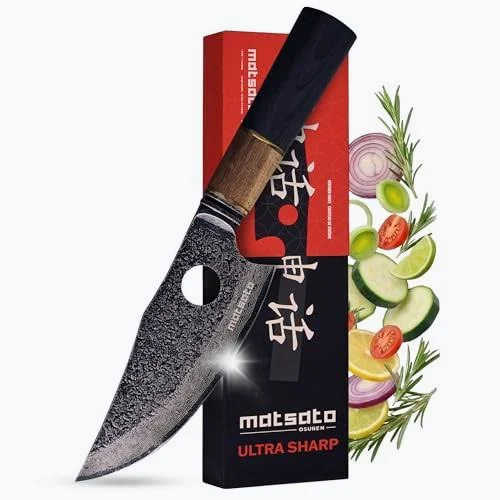
Matsato-osuren.com sells the Osuren range of kitchen knives using impressive advertising, dramatic discounts and repeated references to centuries-old Japanese knife-making traditions. However, when you examine the actual knives and investigate the information provided by the seller, the picture becomes considerably less impressive.
1. These are not traditional Japanese-made knives
The website repeatedly associates its knives with Japanese craftsmanship, traditional techniques and Japanese culinary heritage. However, the company’s own information states that the Osuren knives are manufactured in Asia, without identifying the country of manufacture. There is no evidence that these knives are produced by Japanese craftsmen or in established Japanese knife-making centres such as Seki or Sakai.
Using Japanese-inspired styling is perfectly legitimate, but consumers should not confuse Japanese-inspired marketing with authentic Japanese manufacturing.
2. Questions about the steel used
The seller’s support documentation identifies the blade material as 1.4116 stainless steel, describing it as Japanese stainless steel. However, 1.4116 is a German DIN steel designation, also known as X50CrMoV15. It is a recognised stainless-steel grade, but it is not an exclusive Japanese steel.
This is an important distinction because the website uses Japanese heritage to enhance the perceived value of its products. The actual steel specification does not establish Japanese manufacture or superior Japanese craftsmanship.
3. The ice-hardening claims need independent evidence
Matsato promotes its ice-hardening process, claiming that the blades are cooled below -100°C to improve strength, durability and edge retention.
Cryogenic treatment is a genuine metallurgical process, but that does not automatically mean this particular knife performs better than competing kitchen knives. The seller does not provide independent laboratory results demonstrating the claimed improvement in sharpness retention or durability.
Without independently verified testing, customers are being asked to accept the manufacturer’s advertising rather than measurable evidence.
4. The 138-step manufacturing claim
The website repeatedly promotes a 138-step design and manufacturing process, presenting this as evidence of exceptional attention to detail.
However, there is no meaningful breakdown of these 138 steps, no named manufacturer and no independently verifiable production information. A large number attached to a manufacturing claim is not proof of superior quality.
5. The unusual knife design
The Osuren features a distinctive finger hole near the blade and a broad, curved cutting edge. Although this may appeal to customers looking for something visually different, an unusual design does not automatically make a knife more effective or ergonomic.
The manufacturer’s specifications identify a 16cm blade, a 2.5mm thickness and a weight of 180 grams. These are relatively ordinary specifications for a kitchen knife, rather than evidence of an extraordinary technological development.
6. Discount marketing and the selling price
The website advertises discounts of up to 70%, using promotional language designed to make customers believe they are receiving an exceptional bargain.
Consumers should question whether the advertised original price represents a genuine previous selling price or simply serves to make the discounted offer appear more attractive. A permanent-looking sale is not necessarily a genuine bargain.
7. Who is actually selling these knives?
The privacy documentation identifies UAB Domestica, a Lithuanian company, rather than a Japanese knife manufacturer. This does not make the company illegitimate, but it raises an important question about why the advertising places so much emphasis on Japanese heritage without clearly identifying the actual manufacturing location.
Customers should also examine the returns process, delivery arrangements and the precise legal identity of the business before purchasing.
Final verdict: Avoid Matsato-Osuren.com
The problem with Matsato is not simply whether its knives can cut vegetables or meat. It is the way an ordinary commercial kitchen knife is presented through Japanese craftsmanship references, impressive-sounding technical claims and aggressive discount advertising.
There is no convincing evidence that the Osuren is an authentic Japanese-manufactured knife, and its published steel designation does not support the impression that it uses some exclusive Japanese steel technology.
The ice-hardening claims and 138-step manufacturing process also lack independently published evidence demonstrating that customers receive the exceptional performance suggested by the advertising.
A knife can be perfectly usable without being a premium Japanese product. Consumers should not have to pay a premium based on marketing language that cannot be independently substantiated.
My recommendation is to avoid purchasing from Matsato-osuren.com. There are established kitchen-knife manufacturers that openly identify their steel grades, manufacturing locations, hardness ratings and product specifications. There is little reason to take a chance on heavily promoted products when the seller leaves so many questions unanswered.